What a Homelab Is For
Summary
This note explains what a homelab is actually for in a learning and portfolio context. The goal is to treat the lab as a structured technical environment, not just a pile of hardware and random services.
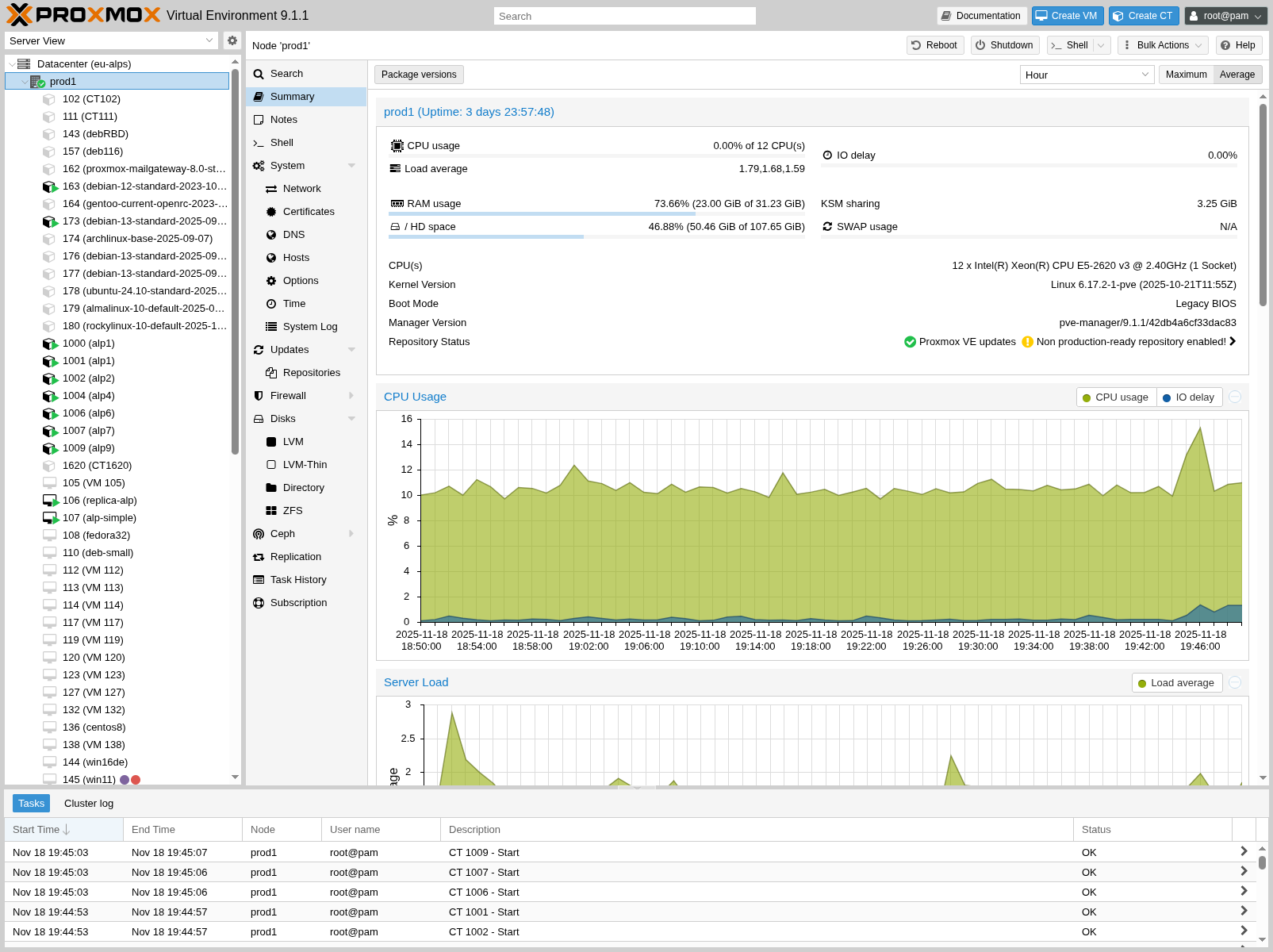
Official Proxmox screenshot showing a node-level summary view, which better fits the idea of a homelab as a real platform you observe, manage, and build on over time.
Why this matters
- a homelab becomes much more useful when it has clear purpose
- infrastructure, security, cloud, and admin skills grow faster in a lab that is designed intentionally
- good lab notes help explain architecture and decisions to other people later
Environment / Scope
| Item | Value |
|---|---|
| Topic | homelab purpose and value |
| Best use for this note | understanding why the lab exists |
| Main focus | learning, repeatability, safe experimentation |
| Safe to practise? | yes |
Key concepts
- Homelab - a personal technical environment used for structured learning, testing, and documentation
- Repeatability - the ability to rebuild or explain parts of the lab clearly
- Safe experimentation - testing ideas without treating the environment carelessly
- Documentation value - writing down what exists and why it exists
Mental model
Think about the lab like this:
infrastructure platform
-> workloads and services
-> learning goals
-> documentation and evidence
The lab is useful when it supports both experimentation and explanation.
Everyday examples
| Lab use | Why it matters |
|---|---|
| test Linux services before public write-up | safer learning and cleaner notes |
| build a SIEM or M365 support lab | creates practical evidence for projects |
| try networking or firewall changes | improves infrastructure understanding |
| compare deployment options | builds design judgement instead of only memorisation |
Common misunderstandings
| Misunderstanding | Better explanation |
|---|---|
| ”Homelab means collecting lots of services” | value comes from structure and purpose, not quantity |
| ”If it runs, the lab is good enough” | maintainability and documentation still matter |
| ”Only enterprise-sized labs count” | small, well-documented labs are often more useful |
| ”Homelab is separate from portfolio” | a good lab often supports the portfolio directly |
Verification
| Check | Expected result |
|---|---|
| Purpose is clear | each major lab area supports a learning goal |
| Services are explainable | workload role is understandable |
| Notes are useful | architecture and decisions are documented |
| Changes are safe enough | experimentation does not become chaos |
Pitfalls / Troubleshooting
| Problem | Likely cause | What to check |
|---|---|---|
| Lab feels messy | too many services with no clear role | architecture and purpose |
| Notes are hard to keep up | weak documentation habit | current services and ownership |
| Changes break unrelated things | poor boundaries or no rollback thinking | workload separation |
| Learning feels shallow | lab exists without clear goals | what each part is actually teaching |
Key takeaways
- a homelab is most valuable when it is intentional, documented, and tied to real learning goals
- small, clear lab design is often better than large messy sprawl
- the lab should support both experimentation and future explanation