Lab Architecture and Service Boundaries
Summary
This note explains why lab architecture and service boundaries matter. The goal is to keep the environment understandable as more services, projects, and domains are added.
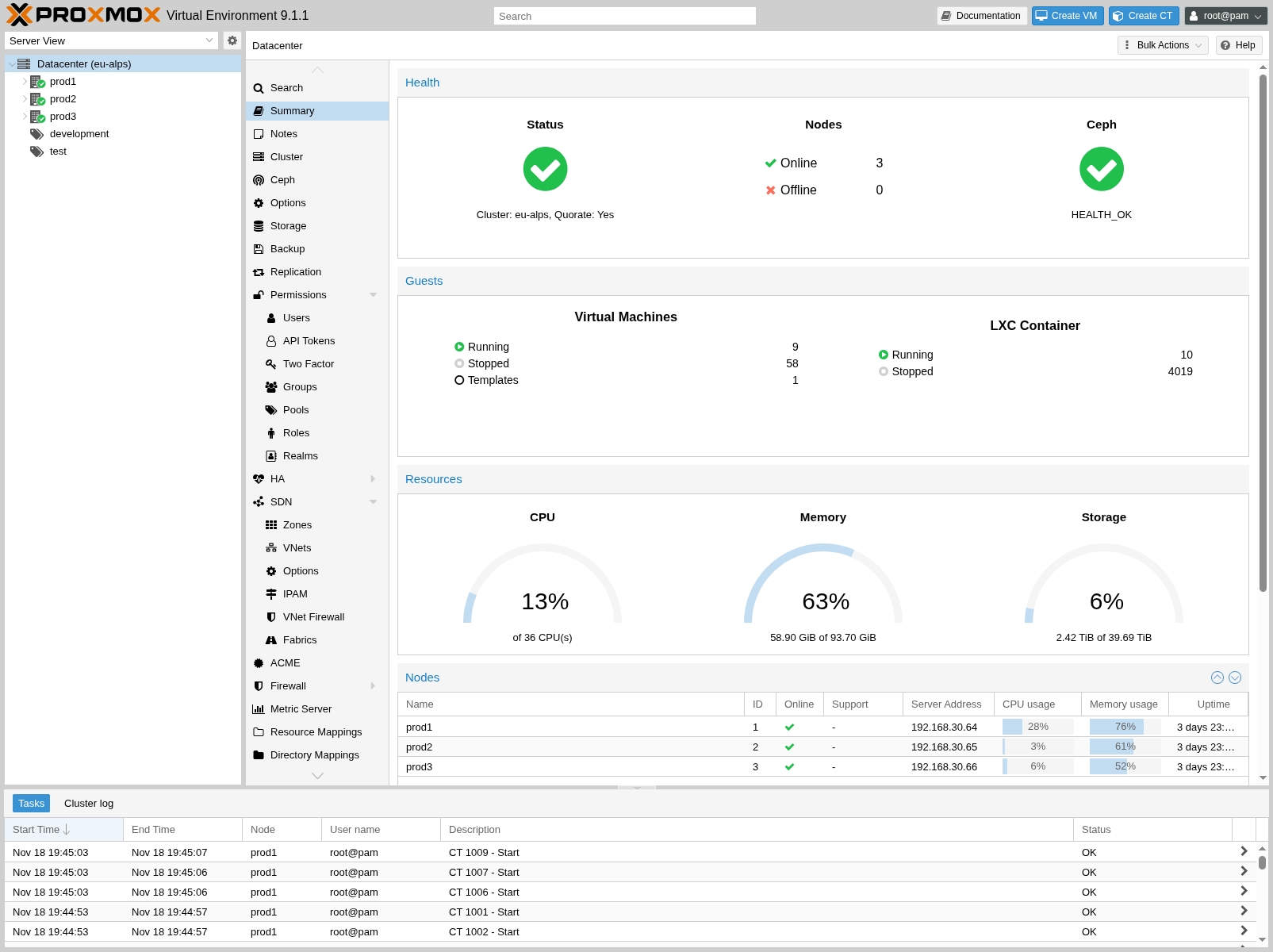
Official Proxmox screenshot showing the wider datacenter view, which fits the idea of seeing the lab as a set of separated but related areas.
Why this matters
- the lab can become fragile if services are added without clear role or ownership
- boundaries make troubleshooting and documentation much easier
- security, networking, and service experiments all benefit from clearer separation
Environment / Scope
| Item | Value |
|---|---|
| Topic | homelab architecture boundaries |
| Best use for this note | keeping the lab understandable over time |
| Main focus | role separation, blast radius, documentation |
| Safe to practise? | yes |
Key concepts
- Service boundary - the separation between workloads so they stay understandable and manageable
- Blast radius - how much of the environment can be affected by one mistake or failure
- Dependency path - what a service needs from the rest of the lab to function
- Architecture note - the written explanation of why something exists where it does
Mental model
Think about the lab like a set of connected but bounded areas:
core infrastructure
-> platform services
-> project-specific workloads
-> learning experiments
Not every experiment should sit in the same place or have the same level of trust.
Everyday examples
| Situation | Why boundaries matter |
|---|---|
| new security service added | should not accidentally disrupt core platform services |
| test networking change | easier if affected path is well understood |
| one project grows in complexity | cleaner if it stays separate from unrelated lab functions |
| backup and recovery planning | simpler when service roles are clear |
Common misunderstandings
| Misunderstanding | Better explanation |
|---|---|
| ”Everything in the lab can share one flat model” | growth usually makes that hard to maintain |
| ”Boundaries only matter in production” | they matter in labs too if you want clean learning and recovery |
| ”If two services talk to each other, they should live together” | dependency does not mean they need the same boundary |
| ”Architecture docs are optional” | without them, lab sprawl becomes harder to reason about |
Verification
| Check | Expected result |
|---|---|
| Service role is documented | workload purpose is clear |
| Dependency path is understandable | you know what a service relies on |
| Blast radius is reasonable | one change does not affect everything blindly |
| Architecture remains explainable | the lab can still be described simply |
Pitfalls / Troubleshooting
| Problem | Likely cause | What to check |
|---|---|---|
| One change breaks too much | weak service boundaries | dependency and placement map |
| Lab feels hard to document | no clear ownership or roles | architecture notes |
| Recovery planning is weak | unclear blast radius | boundaries and core services |
| Projects and platform blur together | no separation between shared infra and experiments | workload grouping |
Key takeaways
- service boundaries improve both safety and clarity in the lab
- architecture matters even in a personal environment
- the lab stays healthier when projects, infrastructure, and experiments are separated thoughtfully